

Rapsolja hör till de bästa matfetterna som är värda att inkludera i din dagliga kost. Förutom sin behagliga, milda smak, erbjuder den en övertygande näringsprofil som gynnar nästan alla – den stöder hjärtat, lederna, och synen, bidrar till hälsosamma kolesterolnivåer, och fyller en dubbel funktion som både en basvara i köket och en ingrediens i hårvårdsprodukter. Men alla rapsoljor är inte lika. Här är vad du ska leta efter – och varför rätt val gör hela skillnaden.
Vad är rapsolja och var kommer den ifrån?
Rapsolja pressas från frön av utvalda sorter av växten Brassica napus. Historiskt sett hade den ett dåligt rykte när det gäller näringsvärdet på grund av höga halter av erukasyra, en förening som förknippas med negativa hälsoeffekter. Moderna odlade sorter — som används i all rapsolja av livsmedelskvalitet Toda y — har förädlats för att innehålla försumbara mängder erukasyra, vilket gör den till en av de mest näringsmässigt balanserade vegetabiliska oljorna som finns.
Utvinningsmetoden avgör både näringsvärdet och användningsområdet i matlagning. Kallpressad, oraffinerad rapsolja pressas vid temperaturer under 40 °C, vilket bevarar dess naturliga fettsyraprofil, fettlösliga vitaminer, och karakteristiska gyllene färg. Denna variant används bäst rå — i dressingar, dippsåser, och avslutande såser. Raffinerad rapsolja, som bearbetas vid höga temperaturer med kemiska lösningsmedel, har en högre rökpunkt och större stabilitet vid värme, vilket gör den lämplig för stekning och bakning – även om mycket av näringsinnehållet går förlorat i processen.
Rapsolja: Näringsmässiga fördelar
Det som skiljer rapsolja från de flesta andra matoljor är dess exceptionella förhållande mellan omega-3 och omega-6. De flesta vegetabiliska oljor domineras av omega-6-fettsyror, som – när de konsumeras i överflöd i förhållande till omega-3 – kan bidra till inflammatoriska processer i kroppen. Rapsolja innehåller naturligt båda i ett förhållande nära 2:1 (mellan omega-6 och omega-3), vilket ligger närmare den rekommenderade näringsbalansen än solros-, majs-, eller sojabönolja.
Dess viktigaste näringsmässiga bidrag inkluderar:
- Oljesyra (omega-9) — en enkelomättad fettsyra som kan bidra till att upprätthålla normala kolesterolnivåer i blodet och främja hjärt- och kärlhälsan
- Alfa-linolensyra (ALA, omega-3) — en växtbaserad essentiell fettsyra som bidrar till normal hjärtfunktion
- Vitamin E — en fettlöslig antioxidant som hjälper till att skydda cellerna mot oxidativ stress och kan bromsa hudens åldrande
- Vitamin K — stödjer normal blodkoagulering och benmetabolism
- Vitamin A-prekursorer (betakaroten) — bidrar till att upprätthålla normal syn
Dessa egenskaper gör rapsolja till ett användbart kosttillskott för dem som vill främja hjärt- och kärlhälsa genom den dagliga kosten. För högre doser av omega-3-tillskott utöver vad kosten ensam kan tillhandahålla, är koncentrerade fisk- eller algoljetillskott fortfarande det effektivare alternativet — utforska vårt sortiment av omega-3 och fiskolja för jämförelse.
Kallpressad vs raffinerad: Vilken rapsolja ska man välja?
Valet beror till stor del på hur du planerar att använda den. Kallpressad, oraffinerad rapsolja från den första pressningen är det näringsmässigt bästa alternativet — perfekt för salladsdressingar, att ringla över rostade grönsaker, att göra vinägretter, eller att tillsätta rå i gröt. Den har en lätt nötig, gräsig smak och en karakteristisk mörkgul färg från sina naturliga karotenoider. Den bör inte värmas upp över måttliga temperaturer, eftersom värme bryter ned de fleromättade fettsyrorna.
Raffinerad rapsolja byter näringsmässig komplexitet mot termisk stabilitet. Dess högre rökpunkt (på cirka 200–220 °C) gör den till det mer praktiska valet för wokning, rostning, och bakning. Om du främst använder oljan för matlagning vid hög värme är raffinerad olja det rätta valet – men tänk på att dess hälsofördelar jämfört med andra raffinerade oljor är mer begränsade än hos den kallpressade motsvarigheten.
Första pressning, oraffinerad kallpressad olja är guldstandarden för näringskvalitet – leta efter denna beteckning när du köper.
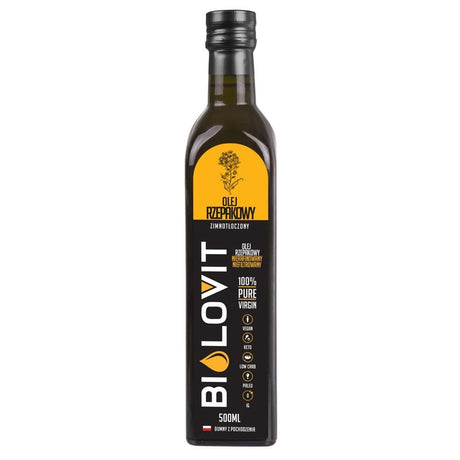


 20% rabatt
Bilovit
Bilovit Canolaolja Kallpressad - 1000 ml
Försäljningspris 101,17 kr Ordinarie pris 126,49 krEnhetspris101,17 kr /l 5% rabatt
Olvita
Olvita Slezanese rapsolja kallpressad – 500 ml
Försäljningspris 61,16 kr Ordinarie pris 64,39 krEnhetspris122,32 kr /l


Rapsolja vs solrosolja: En praktisk jämförelse
Solrosolja är rik på vitamin E och finns i stor utsträckning, men dess fettsyraprofil består nästan uteslutande av omega-6, med mycket lite omega-3. För de flesta europeiska kostvanor – som redan innehåller mycket omega-6 från bearbetade livsmedel – förstärker tillsats av ytterligare solrosolja den redan obalanserade proportionen. Solrosolja har också en relativt låg rökpunkt i oraffinerad form (, omkring 100 °C), vilket begränsar dess användbarhet vid matlagning.
Rapsolja, erbjuder däremot, en mer balanserad fettsyraprofil och fungerar bättre vid upphettning i raffinerad form. För sallader, är båda oljorna bra val beroende på personlig smakpreferens. För matlagning och stekning är rapsolja det bästa alternativet. För rå konsumtion med maximal näringsmässig nytta är kallpressad rapsolja svår att slå bland prisvärda vegetabiliska oljor. Rapsolja för håret Utöver köket har kallpressad rapsolja en plats inom hårvård — särskilt för hårinoljning, vilket innebär att man applicerar olja på håret och hårbotten för att förbättra fuktbevarandet och minska porositetenpressad rapsolja har en plats inom hårvård — särskilt för hårinoljning, vilket innebär att man applicerar olja på håret och hårbotten för att förbättra fuktbevarandet, minska porositeten, och återställa mjukhet och glans. Rapsoljans lätta fettsyraprofil gör den lämplig för hår med medelhög till hög porositet, där den kan tränga in i hårstrået och hjälpa till att jämna ut kutikula-lagret. Den används ofta som ett mer prisvärt alternativ till argan- eller marulaolja för detta ändamål. Oljan kan appliceras före tvätt som en förbehandling eller användas i små mängder på torra hårtoppar som en avslutande produkt.
Hur man förvarar rapsolja
Kallpressad, oraffinerad rapsolja är känslig för ljus, värme, och syre — vilket allt påskyndar oxidationen och gör oljan härsken. Förvara den i sin ursprungliga mörka glas- eller ogenomskinliga flaska, tätt försluten, på en sval och mörk plats, skyddad från direkt solljus. Rumstemperatur eller något svalare är lämpligt; kylförvaring är inte nödvändigt men kan förlänga hållbarheten. När den väl har öppnats bör kallpressad rapsolja helst användas inom 3–4 månader.
Andra kallpressade oljor värda att utforska
Om du är intresserad av kallpressade växtoljor i bredare bemärkelse är rapsolja en utmärkt utgångspunkt – men kategorin är bred. Linfröolja har det högsta ALA-omega-3-innehållet av alla matoljor, vilket gör den till ett populärt tillskott för dem som följer en växtbaserad kost. Hampolja ger ett liknande välbalanserat förhållande mellan omega-6 och omega-3 samt en distinkt jordig smak. Kamelinaolja är ett mindre känt men näringsmässigt jämförbart alternativ till rapsolja med ett högt ALA-innehåll. Utforska vår samling av hälsosam mat och näring för att se hela utbudet av kallpressade oljor som finns tillgängliga hos Medpak.
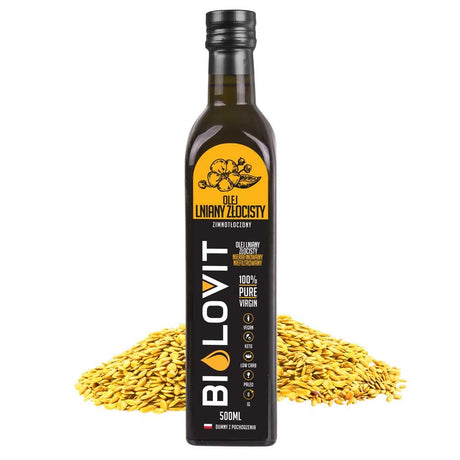
 10% rabatt
Bilovit
Bilovit Golden Linfröolja Kallpressad - 500 ml
Försäljningspris 59,78 kr Ordinarie pris 66,69 krEnhetspris119,56 kr /l
Olvita
Olvita Kallpressad linfröolja för Dr Budwig-dieten, orenad - 500 ml
Ordinarie pris 128,79 krEnhetspris257,58 kr /l

Olvita
Olvita Kallpressad hampaolja, orenad - 500 ml
Ordinarie pris 216,19 krEnhetspris432,38 kr /l


Den här artikeln är endast i informationssyfte och ersätter inte medicinsk rådgivning. Om du har hälsoproblem, är gravid, ammar eller tar läkemedel, rådfråga läkare eller apotek. Kosttillskott ersätter inte en varierad kost.


