

Få växter har tjänat mänskligheten så mångsidigt och så länge som lin (Linum usitatissimum). I tusentals år har den tillhandahållit fiber till linne, frön som livsmedel, och olja för både matlagning och industriellt bruk. Toda och, kallpressad linolja upplever en förnyad uppskattning — driven av forskning om dess exceptionella omega-3-innehåll, dess roll i Budwig-kostprotokollet, och dess växande användning inom naturlig hudvård. Här är en omfattande översikt över vad linolja innehåller, vad den erbjuder, och hur man använder den på bästa sätt.
Hur linolja tillverkas
Linolja utvinns ur linfrön genom kallpressning – en mekanisk process som utförs vid låg temperatur (vanligtvis under 50 °C) vilket bevarar oljans naturliga fettsyrasammansättning och fettlösliga näringsämnen. Kallpressad, oraffinerad linolja kännetecknas av sin gyllene till bärnstensfärgade färg, sin lätt gräsiga och nötiga doft, och en kort hållbarhet jämfört med mer stabila oljor. Den oxiderar relativt snabbt på grund av sitt höga innehåll av fleromättade fettsyror — särskilt ALA — och måste förvaras i en förseglad mörk glasflaska på en sval eller kyld plats och användas inom den tidsram som anges på etiketten. Både bruna och gyllene linfrösorter används för oljeproduktion. Näringsprofilerna är jämförbara, även om gul linfröolja tenderar att ha en mildare och något mer neutral smak – en användbar skillnad för dem som tycker att vanlig linolja smakar för intensivt.
Näringssammansättning
Linfröolja har en av de högsta koncentrationerna av alfa-linolensyra (ALA) av alla vanligt förekommande matoljor — vanligtvis 50–60 % av de totala fettsyrorna. ALA är den växtbaserade omega-3-fettsyran som klassificeras som näringsmässigt essentiell: kroppen kan inte producera den, så den måste komma från maten. Linolja innehåller också linolsyra (omega-6) i cirka 15–20 %, och oljesyra (omega-9), vilket ger ett fettsyreförhållande som är ovanligt fördelaktigt jämfört med de flesta moderna matfetter.
Utöver fettsyror, innehåller kallpressad linolja vitamin E (tokoferoler) — en fettlöslig antioxidant — samt växtlignaner (särskilt i hela frön och ofiltrerade oljor), som har väckt intresse för sina fytoöstrogena och antioxidativa egenskaper. ALA-halten bidrar till att upprätthålla normala kolesterolnivåer i blodet när den ersätter mättat fett i kosten — ett EU-godkänt hälsopåstående som bygger på gedigen evidens.
Hälsofördelar med linfröolja
Stöd för hjärt- och kärlhälsa
Linfröoljans främsta fördel för hjärt- och kärlhälsan är kopplad till dess ALA-halt. ALA bidrar till att upprätthålla normala kolesterolnivåer i blodet när det ersätter mättat fett i kosten. Dess antiinflammatoriska egenskaper — som förmedlas via omega-3-vägar — kan också bidra till vaskulär hälsa över tid när det används som en del av en varierad, balanserad kost. De som vill komplettera sitt intag av omega-3 i kosten med EPA och DHA (de långkedjiga marina omega-3-fettsyrorna) bör notera att omvandlingen av ALA i kroppen är begränsad; kosttillskott baserade på fiskolja eller alger är fortfarande den mest pålitliga källan till dessa specifika fettsyror. Vårt sortiment av kosttillskott för hjärt- och kärlhälsa https://medpak.shop/collections/cardiovascular"> omfattar produkter som täcker både vegetabiliska och marina omega-3-källor.
Matsmältningshälsa och viktkontroll
Hela linfrön och linfröolja har en lång tradition av användning för att stödja matsmältningen — särskilt vid trög matsmältning, uppblåsthet, och oregelbunden tarmpassage. Oljan har en mild smörjande effekt på matsmältningskanalen och dess antiinflammatoriska egenskaper kan bidra till att stödja tarmslemhinnan. När det gäller viktkontroll specifikt bidrar linfröolja till mättnadskänsla, eftersom de hälsosamma fetterna saktar ner magtömningen och stödjer upptaget av fettlösliga näringsämnen från grönsaker och andra livsmedel som den konsumeras tillsammans med. Det är inte en viktminskningsprodukt i sig, men den stödjer en näringsmässigt komplett och tillfredsställande kost.
Hormonbalans
Lignaner i linfrö – som finns i störst mängd i hela frön men även i kallpressad ofiltrerad olja – har studerats för sin fytoöstrogena aktivitet. De kan interagera svagt med östrogenreceptorer, och viss forskning tyder på att regelbunden konsumtion av linfrö kan bidra till att mildra vissa symtom förknippade med hormonella svängningar, bland annat under klimakteriet. Bevisen är preliminära, och effekterna är måttliga; linolja bör inte ersätta medicinsk behandling av klimakteriesymtom, men det är ett rimligt kosttillskott.
Linolja i hudvård
Oavsett om den appliceras lokalt eller tas som kosttillskott, gör linoljans fettsyraprofil den relevant för hudens hälsa. Dess höga ALA-halt, i kombination med vitamin E och antiinflammatoriska egenskaper, stöder hudens naturliga lipidbarriär – vilket hjälper till att minska vattenförlust, förbättra elasticiteten, och lugna reaktiv eller torr hud. Den är särskilt uppskattad vid användning vid tillstånd som involverar en nedsatt hudbarriär, såsom eksem, psoriasis, och atopisk Derma titis.
Som en utvärtes produkt, kan linolja appliceras direkt på huden som ett serum eller kombineras med andra basoljor. För håret, används den för att ge näring åt hårbotten och stärka hårstråna från rot till topp. Vid invärtes intag, stödjer dess omega-3-innehåll hudens fuktbalans och minskar de proinflammatoriska signaler som kan förvärra tillstånd som akne och rodnad. För dem som söker riktade kosttillskott för hud och hår som komplement till olja i kosten, erbjuder vår hår, hud och naglar-kollektion ytterligare alternativ.
Traditionella användningsområden: Trä, läder och metall
Historiskt sett var linolja ett av de mest använda icke-livsmedelsmaterialen inom europeiskt hantverk och industri. Som en torkande olja – en olja som polymeriserar när den utsätts för luft och bildar en hård film – användes den som ett naturligt träskyddsmedel, ett bindemedel i oljefärger, och ett impregneringsmedel för läder och metallverktyg. Dessa användningsområden föregick moderna syntetiska alternativ med århundraden och förblir en referenspunkt för växtens anmärkningsvärda mångsidighet. För modern kulinarisk och kostmässig användning, är dock, kallpressade oljor av livsmedelskvalitet det lämpliga formatet – till skillnad från kokta eller kommersiella linoljor, som innehåller tillsatser och inte är lämpliga för konsumtion.
Hur man använder linolja i praktiken
Linolja är en olja som endast ska användas rå – den bör aldrig värmas upp, eftersom höga temperaturer snabbt bryter ned dess ALA-halt och ger upphov till skadliga oxidationsprodukter. De mest praktiska användningsområdena är:
- Som salladsdressing — i kombination med citronsaft, vitlök, och örter, blir linolja en näringsrik dressing till grönsallader och grötbowls
- Rörd i färdiga rätter — ringla över kokta spannmål, soppor, eller grönsaker strax före servering
- Som kosttillskott — intas direkt från en sked, ensamt eller blandat med en liten mängd mjölkprodukter enligt Budwig-protokollet
- I smoothies — blandas väl med frukt och mjölkprodukter eller växtbaserad mjölk
- Som hudvårdsolja — används direkt eller blandat med bäraroljor för lokal applicering
Det rekommenderade dagliga intaget för vuxna är vanligtvis 1–2 matskedar (15–30 ml) per dag. Intag som ligger betydligt över detta är inte nödvändiga för näringsändamål och bör hanteras med försiktighet, eftersom mycket höga intag av omega-6 och omega-3 från en enda källa inte är utan nackdelar i sammanhanget av den totala fettbalansen.
Kallpressade linfröoljor hos Medpak
Vi har kallpressade linfrö- och gyllene linfröoljor från pålitliga europeiska producenter — inklusive Olvita:s formulering som är speciellt utformad för Budwig-protokollet — i förpackningar som sträcker sig från introduktionsstorlekar på 250 ml till 1-liters familjeförpackningar:

Olvita
Olvita Kallpressad linfröolja för Dr Budwig-dieten, orenad - 500 ml
Ordinarie pris 127,69 krEnhetspris255,38 kr /l



 16% rabatt
Bilovit
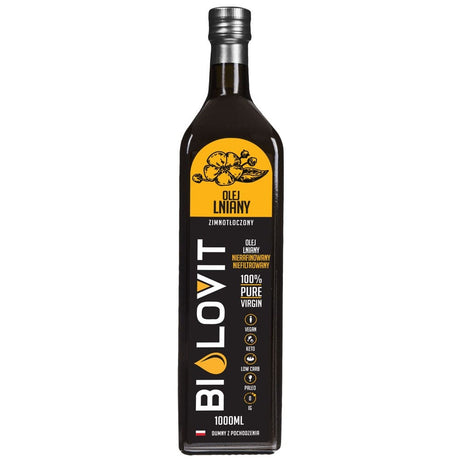
Bilovit Linfröolja Kallpressad - 1000 ml
Försäljningspris 91,17 kr Ordinarie pris 108,29 krEnhetspris91,17 kr /l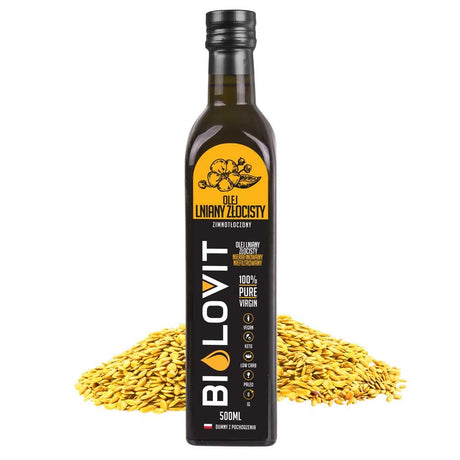

Bilovit
Bilovit Golden Linfröolja Kallpressad - 500 ml
Ordinarie pris 65,99 krEnhetspris131,98 kr /l


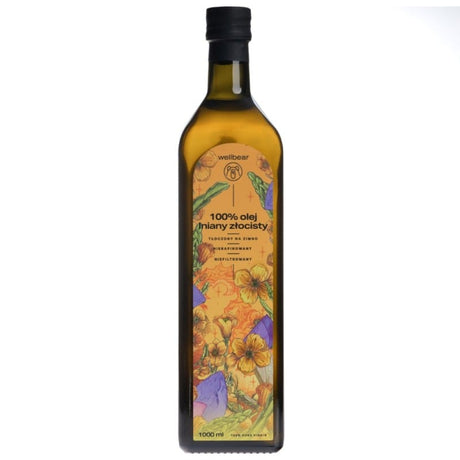

Wellbear
Wellbear Golden linfröolja kallpressad - 1000 ml
Ordinarie pris 105,99 krEnhetspris105,99 kr /l


Alla kallpressade växtoljor finns i vår matoljor och vinäger-kollektion.
Linfröolja i kapselform
För dem som tycker att linfröolja smakar konstigt eller vill ha en bekväm, uppmätt daglig dos erbjuder, linfröoljekapslar samma ALA-rika fettsyraprofil i ett resevänligt, smakneutralt format. Dessa är också användbara för personer som vill komplettera linfröolja tillsammans med ett bredare omega-3-intag:


Now Foods
Now Foods Linolja 1000 mg - 100 softgels
Ordinarie pris 114,69 krEnhetspris1,15 kr vardera


Now Foods
Now Foods Linolja 1000 mg - 250 softgels
Ordinarie pris 261,19 krEnhetspris1,04 kr vardera

Swanson
Swanson MultiOmega 3-6-9 Lin, Gurkört & Fiskoljor - 120 Softgels
Ordinarie pris 248,29 krEnhetspris2,07 kr vardera


Den här artikeln är endast i informationssyfte och ersätter inte medicinsk rådgivning. Om du har hälsoproblem, är gravid, ammar eller tar läkemedel, rådfråga läkare eller apotek. Kosttillskott ersätter inte en varierad kost.


