

När ett barn kommer till världen, förändras allt – och det är inte alltid lätt att förbereda sig på alla dessa förändringar. Ett av de överraskande viktiga beslut som nya föräldrar står inför är att välja rätt napp till nappflaskan. Det kan verka som en liten detalj, men den napp du väljer kan påverka ditt barns matkomfort, käkutveckling, och till och med talet senare i livet.
Varför är rätt napp till nappflaskan så viktig?
Det är lätt att anta att alla nappar är likadana – trots allt, fyller de ett och samma grundläggande syfte. I verkligheten, påverkar typen av napp hur barnets käkmuskler och underkäksben utvecklas under matningen. Käken, är i sin tur, nära kopplad till talapparaten. Ett felaktigt valt napp kan bidra till svårigheter med artikulation och talutveckling när barnet växer upp. Många talavvikelser hos små barn kan spåras tillbaka till matvanor som etablerats under spädbarnstiden.
Under matningen, koordinerar ett barn tre grundläggande handlingar samtidigt: sugande, andning, och sväljning. En nyfödd gör vanligtvis cirka 60 sugande rörelser per minut men sväljer bara varannan rörelse. Även om denna process verkar enkel, spelar den en viktig roll i munhålans utveckling och lägger grunden för senare talförmåga. Att använda rätt napp hjälper till att säkerställa att denna process går så smidigt som möjligt.
Nippelns form och varför den är viktig
Formen på en nippel till en nappflaska är ett av de viktigaste urvalskriterierna. Den påverkar direkt käkens tillväxt, bildandet av de första mjölktänderna, och den allmänna matningskomforten. Under sugandet, expanderar barnets käke, vilket påverkar hur munhålan utvecklas över tid. Här är de vanligaste formerna du kommer att stöta på:
- Ortodontisk (anatomisk) napp — utformad för att följa den naturliga konturen av ett barns mun. Denna form bidrar till att stödja en korrekt käklinje och kan hjälpa till att förebygga bettfel.
- Rund (traditionell) napp — har en avlång, symmetrisk form som är enhetlig från alla vinklar. Det är en klassisk design som många barn accepterar lätt.
- Napp med bred hals — liknar formen på en mammas bröstvårta och är utformad för ett naturligt grepp. Fungerar bra med flaskor med vid hals.
- Bröstformad napp — mjölken rinner inte fritt från denna typ, så barnet måste suga aktivt för att få mat. Detta är ett utmärkt alternativ när du växlar mellan bröst och flaska, eller när du gradvis avvänjer från amning.
Om du letar efter nipplar och flaskor från pålitliga varumärken, kan du utforska utbudet av matningsprodukter hos Medpak för alternativ från Philips Avent, Dr Brown's, och Tommee Tippee.
Gummi vs silikon — att välja rätt material
Nappar till nappflaskor tillverkas vanligtvis av ett av två material, vart och ett med sina egna fördelar:
Gummi (latex) nappar är bruna, känns något matta vid beröring, och har en karakteristisk doft och smak. Deras största fördel är hållbarheten – de tål att bitas i väl, vilket gör dem till ett bra val under tandväxtfasen. Nackdelen är att, gummispenar kan förlora sin ursprungliga form och elasticitet med tiden och kan behöva bytas ut oftare.
Silikonsnuttar är genomskinliga, luktfria, och smaklösa. Eftersom de inte erbjuder någon sensorisk skillnad jämfört med bröstet, rekommenderas silikonsnuttar ofta när du vill kombinera amning med flaskmatning eller helt övergå från amning. De tenderar att behålla sin form längre än latex, även om de är mindre tåliga mot bitande.
Flödeshastighet — Anpassa nappen efter ditt barns ålder
Den perfekta nappen låter mjölken flöda utan för mycket motstånd, men inte heller för fritt. Om flödet är för snabbt, kan barnet sätta i halsen, svälja för mycket luft (vilket kan orsaka kolik), eller göra att barnet blir lat när det gäller att suga. Att få rätt flödeshastighet är avgörande för en bekväm och säker matning.
Här är en allmän guide till flödeshastigheter efter ålder:
- Nyfödd (0–3 månader) — använd en napp med långsamt flöde. Barnets munhåla är fortfarande under utveckling, och ett lugnt flöde hjälper barnet att lära sig att samordna sugande och sväljning.
- Från 3–6 månader — ett napp med medelhögt flöde blir lämpligt när barnet får bättre kontroll över munnen och klarar av ett något snabbare flöde.
- Från 6–12 månader och uppåt — ett snabbflödande napp kan introduceras. Vid detta stadium, är käken och munnen välutvecklade Enough så att barnet klarar tjockare vätskor och snabbare flöde.
Anti-kolik-nappar och -flaskor – är de värda pengarna?
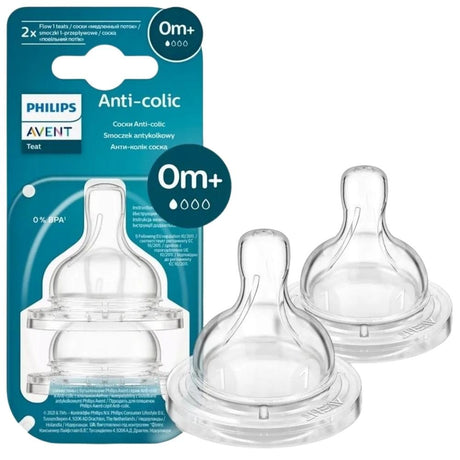
Kolik orsakad av svalt luft är ett av de vanligaste problemen vid flaskmatning. Anti-kolik-nappar är speciellt utformade för att minska mängden luft som barnet sväljer. De har vanligtvis inbyggda rör eller ventiler som leder tillbaka överskottsluft till flaskan istället för in i barnets mun. Vissa modeller har också en lätt böjd form för att ytterligare minimera luftintaget.
Varumärken som Philips Avent och Tommee Tippee erbjuder särskilda antikoliksystem som kombinerar specialnappar med ventilerade flaskor. Om ditt barn ofta verkar obekvämt efter matning, upplever gaser, eller visar tecken på kolik, kan det ge lindring att byta till ett antikoliksats. Bläddra igenom hela sortimentet av matningsprodukter för barn hos Medpak för att hitta rätt lösning.

Praktiska tips för att välja den bästa nappen
Med så många alternativ tillgängliga, kan det kännas överväldigande att välja rätt napp. Här är några praktiska riktlinjer som hjälper dig att bestämma dig:
- Börja med en silikonnapp, med långsamt flöde för nyfödda – det är den säkraste och mest mångsidiga utgångspunkten.
- Anpassa nappen efter ditt barns ålder och matningsstil – öka flödet gradvis i takt med att barnet växer.
- Överväg alternativ mot kolik om ditt barn visar tecken på gaser eller obehag efter matningen.
- Om du kombinerar amning och flaska, välj ett bröstformat eller ett napp med bred hals för att underlätta ett naturligt grepp.
- Byt ut nipplar regelbundet – kontrollera om det finns tecken på slitage, missfärgning, eller klibbighet, särskilt när det gäller latex.
Att stödja ditt barns allmänna hälsa börjar med att få grunderna rätt – och nappflaskan är en av dessa nödvändigheter. För allt från matningstillbehör till hygienprodukter för barn, har avdelningen för barns hygien på Medpak allt du behöver.
Viktig slutsats: Rätt napp till nappflaskan stödjer en sund käkutveckling, bekväm matning, och kan till och med påverka ditt barns talutveckling längre fram. Ta dig tid att anpassa nappens form, material, och flödeshastighet efter ditt barns ålder och behov – det är ett litet val som gör en stor skillnad.
Den här artikeln är endast i informationssyfte och ersätter inte medicinsk rådgivning. Om du har hälsoproblem, är gravid, ammar eller tar läkemedel, rådfråga läkare eller apotek. Kosttillskott ersätter inte en varierad kost.


